Star's Story

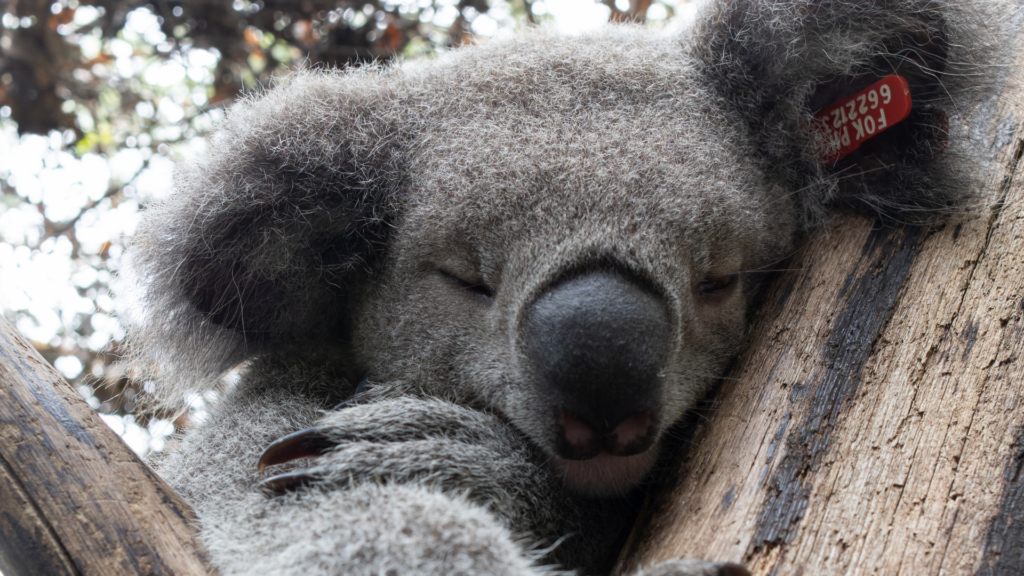
It was with great sadness that I heard the news that Star, our bushfire survivor, had been euthanased up at the Australia Zoo due to intestinal problems that were making her very sick. Like many of our volunteers, I had become very fond of Star during the three years that she was with us. In fact, Star was the first koala I met and cared for when I joined the FOK in 2003. So to honour her beautiful nature and strong spirit, here is her story.

Star was a young female with a joey when she was caught in the bushfires that swept through the Rileys Hill area near Broadwater tip and Evans Head early February 2003. The fires were results of burn offs that went out of control in the extremely dry conditions at that time, and also killed possums, an echidna, land mullets and snakes. Following the fire Rileys Hill had no viable trees that could support a koala colony again. It had once had stands of Swamp Mahogany, Star’s favourite leaf, but now was struggling to regenerate due to the ferocity of the fire.

Star was lucky, as 5 of the other koalas in her colony were burnt to death. Volunteers monitored two other survivors and put leaf out, but weren’t able to catch them to treat their burns. Star and another female survivor called Celeste came into care on the 3rd of February. Both were burnt on their paws, face and bottoms, but Star was more badly affected and lost her claws and the joey too. Celeste recovered quickly with care and spent a short time with Wendy before her release in April out near Mullumbimby.

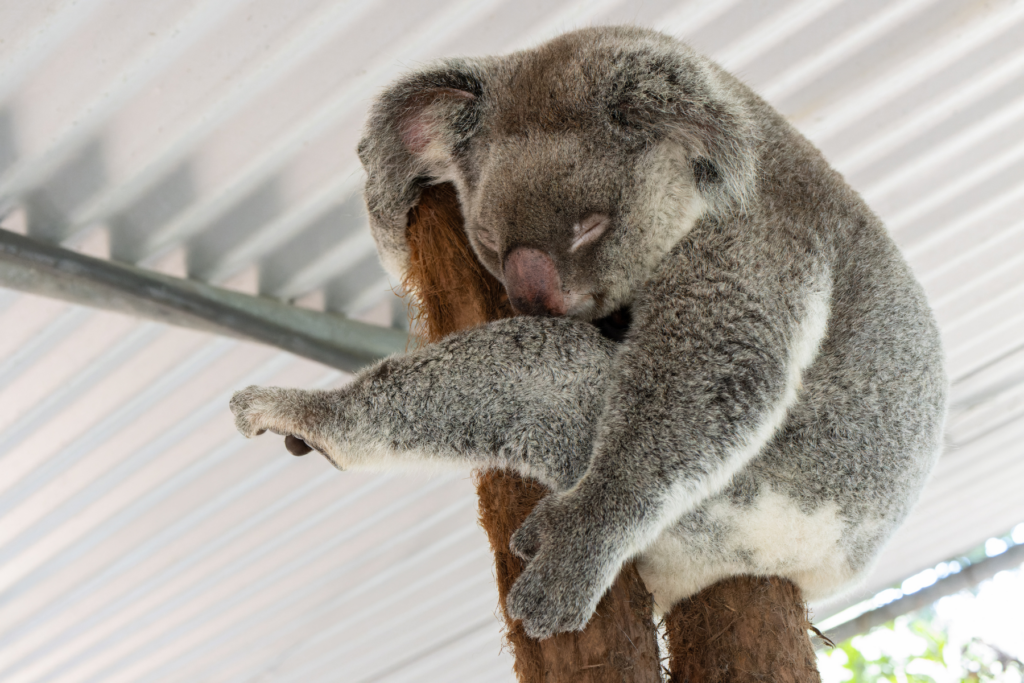
It was about this time in March, when Star was inside still being treated for burns on her paws, ears and bottom, that I met her. Despite her pain and the frequent treatments she required, Star was friendly and curious. I remember her gingerly walking up her logs that were wrapped in towels to pad them for her sore paws so that she could say hello. She really appreciated being hand fed her supplement and swamp mahogany leaf tips. If you inadvertently hurt her, as so often happened then, she would squeak in a high pitched protest, but never tried to bite or scratch. She also developed a habit of sitting with her paws folded in front of her, not hanging onto the logs as other koalas do, something she continued to do even when out in the pre-release area.

Star was not able to be released due to her claw regrowth – the new claws were chalky, blunt and oddly shaped, and this prevented her climbing the smooth barked gum trees like forest red and swamp mahogany, only the Tallowood trees. Without that ability she would be vulnerable to dog attacks and wouldn’t be able to eat the variety of leaf needed for good health. Despite this she managed to escape in 2004 for a few months, but returned herself when she became unwell. During her ‘escape time’ she had become malnourished and caught Chlamydia - from an infected male, no doubt – and treatment was successfully given to her.

Special permission was gained from NPWS to keep Star as a permanent resident at the care centre, and we had hopes she could have another joey. She certainly was a cutie, and several amorous males visited her courting! Alas, despite one exciting time where the outline of something could be seen in her pouch (named ‘twinkle’ in anticipation), she never had that joey. Those who knew her, including me, thought she got a bit depressed about the time of the anniversary of the bushfires each year.

In 2005 she and Brendan, another permanent resident due to the loss of an eye and blindness caused by being hit by a car, were introduced and shared an enclosure. Brendan did get a bit excited during mating time, bellowing and grunting, but Star kept her distance. And then late last year Star went off her food, lost weight, and her scat production reduced greatly.

Despite excellent loving care from us all and supplementary feeds, she continued to be unwell, so was sent up to Australia Zoo for investigation. Gail Gipp and Jon Hanger cared for her, so we knew she was in the best of hands. Their investigations showed that Star had something wrong with her reproductive organs which were removed. Initially she got over the operation really well, and the news was all positive about her long term health improvement. However, sadly, she took another nosedive, and further investigations showed her bowel was abnormal and would make her really sick for the rest of her life. We all know that for koalas and their unique but toxic diet of gum leaves, a healthy bowel is imperative or they will simply starve to death, a slow and painful prospect. The difficult decision to euthanase Star was taken to save her from that, and it was the correct one.

For those of us who loved Star, and had lived the highs and lows of her stay with us, it was a very sad occasion. We didn’t get the chance to say goodbye to that beautiful little girl that had brightened our lives for 3 years. So here it is,

Goodbye Star, we’ll miss you.

Submitted by Jill Barwick